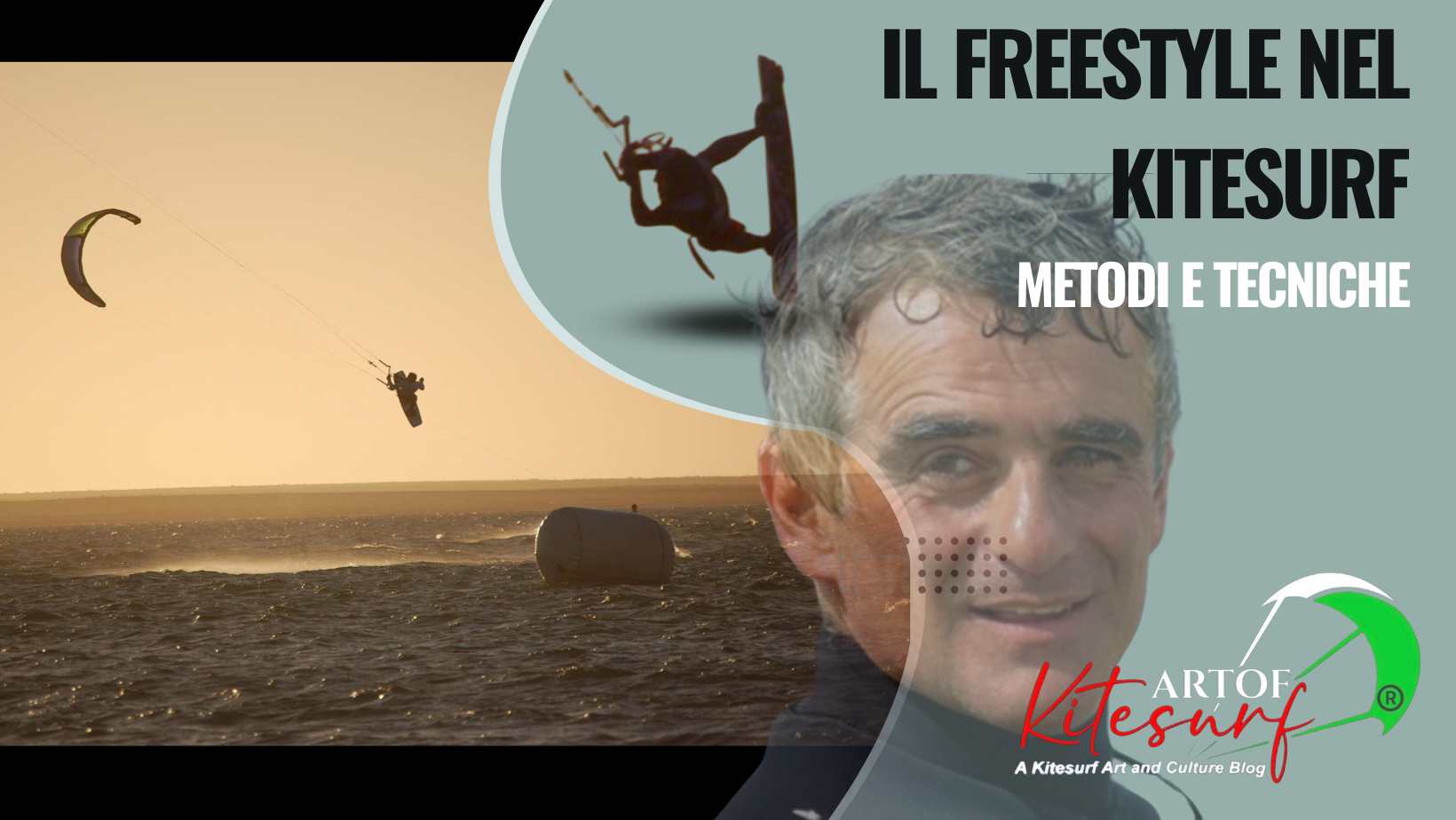
FREESTYLE IN KITESURF METHODS AND TECHNIQUES

Freestyle kitesurfing (new school) means power, freedom of movement, aggressive landings, thrills, and lots of crashes in the water. All this should already tell you that it's not for everyone. Young age, flexibility, and muscle power are key, along with a healthy dose of courage. But in this Artofkitesurf article , I don't want to talk about super champions or how to become one, but simply how to get started with a solid and safe foundation. Even in this discipline, there are small, fun maneuvers to learn that anyone can master, without necessarily possessing any particular athletic ability. But let's take it one step at a time.
Freestyle kitesurfing set and trim
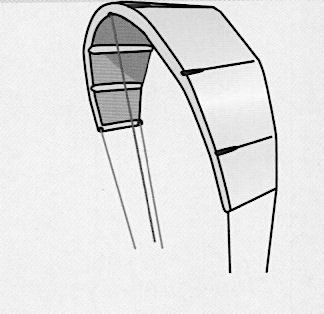
First, as always, let's start by understanding and knowing how to adjust your kite for future, successful, and safe growth. The bar of a freestyle kite should be in the last third of the depower range (closest to the chicken loop). This means you shouldn't have too much pressure on the harness and bar in the upper two-thirds.
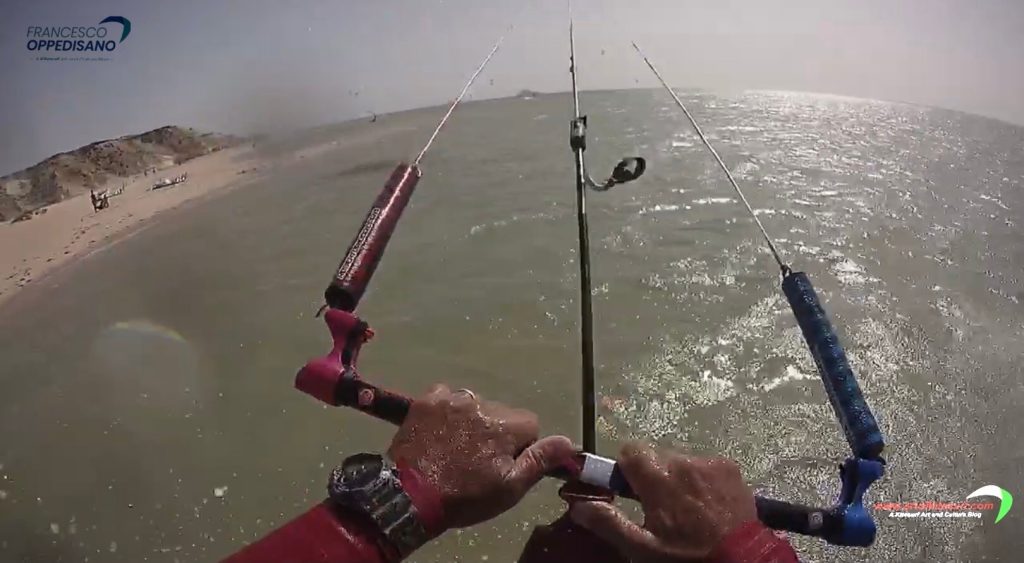
Freestyle kitesurfing requires this first, very important aspect. Being able to unhook with the right balance of tension on the lines combined with a dynamic and powerful pop will help you find the famous dead spot on your kite, essential for completing any maneuver. To do this, you need to adjust the lines using the active and passive trimmers available on the bar and the kite.
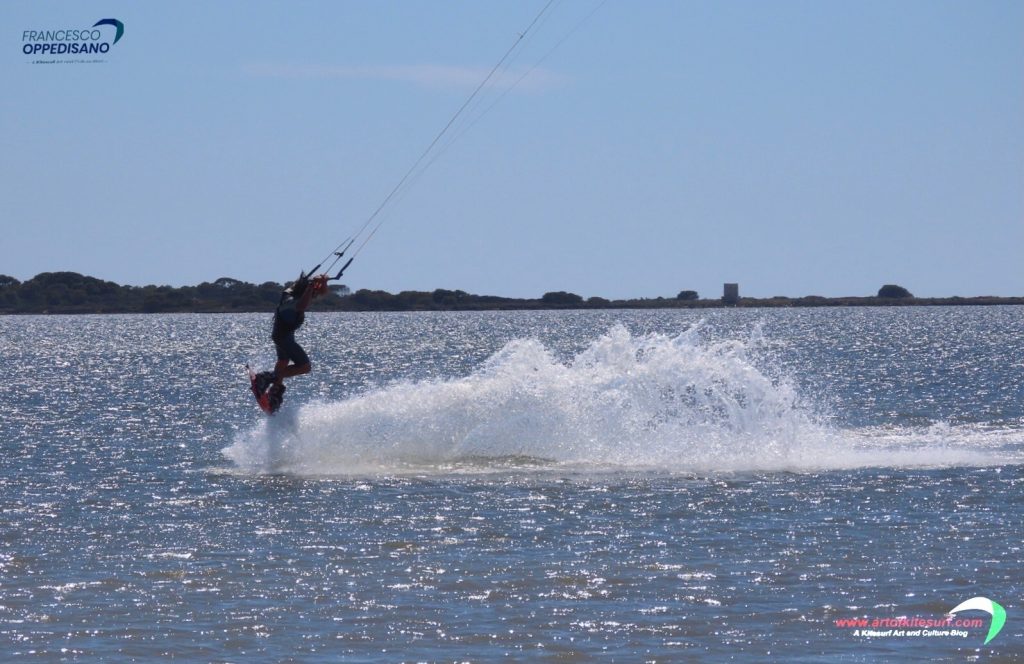
The kite should not transmit too much power to the rider in the first two thirds of depower.
To get a rough idea, you can do a simple test . Enter the water waist-deep in light winds, make sure there are no people downwind of you, wear a helmet and jacket, and the kite at the edge of the window. Now try unhooking and, with your arms outstretched, bring it toward midday. If the kite shows no signs of backflipping and its back lines are generally tight (but not loose), it may be well trimmed. The kite's flight stability when unhooked should be very stable, with no signs of stalling.
Freestyle kitesurfing presents you with the issue of the leash and its placement. For your very first exercises, the leash should remain attached to the front of the harness. I strongly advise against attaching it to the back, as this would offer no advantage and could actually put you in serious danger. Only later, once you have adequate technical training, can you move it. The leash should still be attached to the side where you plan to begin turning your first tricks; to be clear, it should be positioned on the side where you will keep your hand on the bar during the maneuver. I encourage and strongly recommend you follow this valuable advice for your safety and growth.
FREESTYLE IN KITESURFING AND YOUR FIRST RELEASE EXERCISES
Before thinking about unhooking, once you've trimmed your kite properly, try moving it from one edge of the window to the other, always keeping the bar low. If you can easily control the kite's movement without having to raise the bar, for example, to recover from a stall, you can consider starting to do it unhooked. After this phase, what you need to learn and understand is how to unhook and rehook with extreme ease. Freestyle kitesurfing requires dynamic exercises, which you need to work on consciously to understand every aspect of this discipline.
You can start in shallow water by bringing the kite to the edge of the window. Now, with your hands firmly planted on the center of the bar, unhook yourself, keeping your arms slightly bent with your elbows close to your sides, keeping the chicken loop close to the harness hook, ready to re-hook if necessary. Start raising the kite a few meters, and as you lower it, try to hook in. When doing this maneuver, if you feel a little too much pressure on the bar, get used to taking a step or two toward the kite so you can understand some fundamental dynamic aspects for when you have to do it with the board under your feet.
This movement must be performed correctly, following a precise technique , to gain mastery and confidence in the movement, before moving on to the next step. Raise the kite toward the zenith by extending your arms and guide it to the opposite edge of the window, bringing your elbows back to your sides. Remember that if you find yourself unable to maintain the pull of the kite, you must immediately release the bar and use the chicken loop to reattach yourself, especially if this happens with the kite at the zenith. This movement will help depower the entire kite and make it easier to reattach yourself to the harness.
Another exercise to do is to bring the kite at 12 o'clock above your head and try to unhook while holding the kite still. Once you have gained this control, try letting go of the bar (especially if you feel too much power and struggle to hold it) and grab the leash with one hand. In this way you will have the possibility to hook quickly because the kite losing the tension of the backlines will decrease its strength. It is obvious that the kite without a control will tend to fall on one side or the other of the window. This exercise will teach you to manage the kite with one hand placed in the center of the bar while with the other, grabbing the chicken loop, you will try to hook onto the harness.
FREESTYLE IN KITESURF KITE NAVIGATION AND MANAGEMENT TESTS.
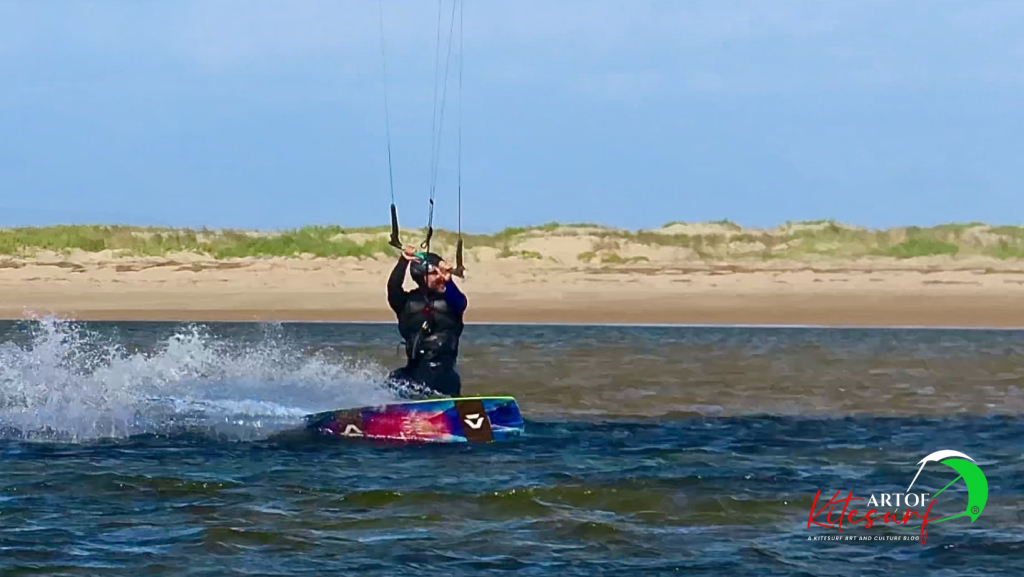
To understand the sensations you experience when you first unhook yourself, you need to learn to perform certain navigational actions. These very first approaches are very important; they may seem like useless and trivial exercises, but I assure you that when done with a precise technique, they're not so obvious. When you perform all these steps, you need to understand, or have someone explain to you very clearly, where you need to focus your attention to be able to perceive every nuance of that movement.
First, while hooked in, try to go downwind, trying to take as much pressure off the harness as possible while keeping the bar responsive to the kite. In this position, your weight and body posture should be more to the rear (but not too much) of the board, extending your front leg, which will be responsible for directing and controlling the twintip. Keep your chest, hips, and front leg roughly in line, with the board flat. Be careful to keep the kite responsive and dynamic, as the risk of it falling into the water is very high.
Now, from a downwind ride, switch to a crosswind, always paying attention to your position on the board. Remember that when practicing freestyle kitesurfing, the correct positioning of your weight on the twintip is very important, so keep your body weight slightly on the back, but this time project your shoulders more forward . Now try to control your speed by decreasing or increasing the pressure on the bar. Get used to transmitting and transforming the kite's power evenly through your legs across the entire board. When you get upwind , pay attention to everything you need to change.
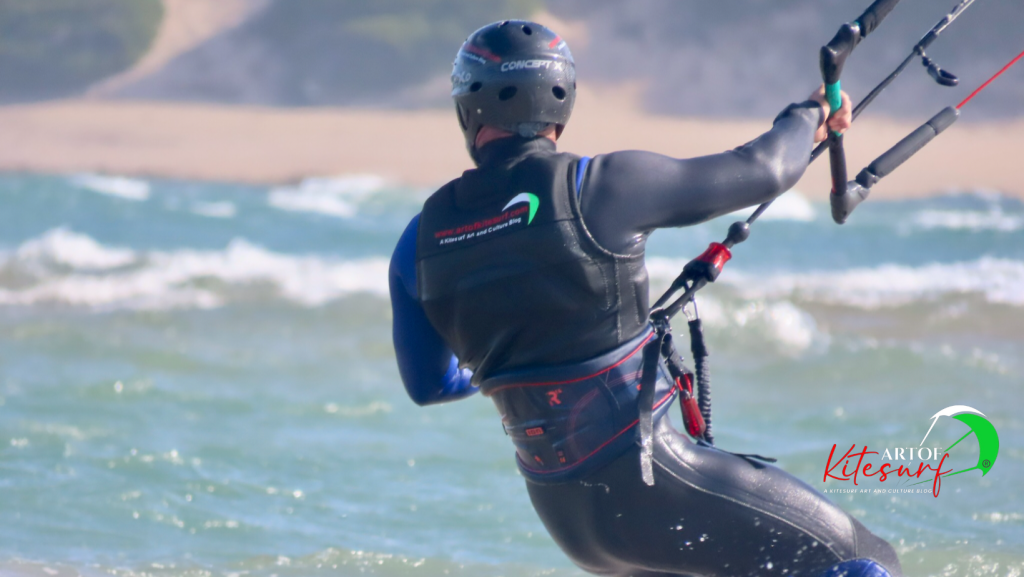
First, your stance on the board should be more compact, lowering your body's center of gravity slightly. Turn your hips, chest, shoulders, and gaze toward the wind and try to increase the pressure on the entire profile of the twintip to allow it to ride upwind more easily and effectively. Always try to control your speed; you must always be in complete control of it.
An important clarification to dispel a widespread but terribly wrong myth. To sail upwind , turning your head and looking upwind is pointless unless you first move your hips, chest, and shoulders toward that direction. If you do all this correctly, focusing on what the sail is transmitting to the harness, each individual exercise will be easier to understand and execute correctly, giving you greater awareness as you move on to phase two.
The next step will simply be to repeat everything from the beginning, but this time unhooked. Obviously, as you unhook yourself at various stages, you'll need to remember to always release some pressure from the bar by moving your shoulders forward toward the sail or by slightly turning the board downwind. The sailing sections should be short during these exercises, as the goal is to unhook and rehook yourself several times to gain greater confidence and dynamic movement.
Choose favorable sea and weather conditions with mostly flat water and moderate winds. Wear a helmet and life jacket, a leash attached to the front, and uncrowded spots.
Freestyle in kitesurfing is the first dynamic movement after the first phase
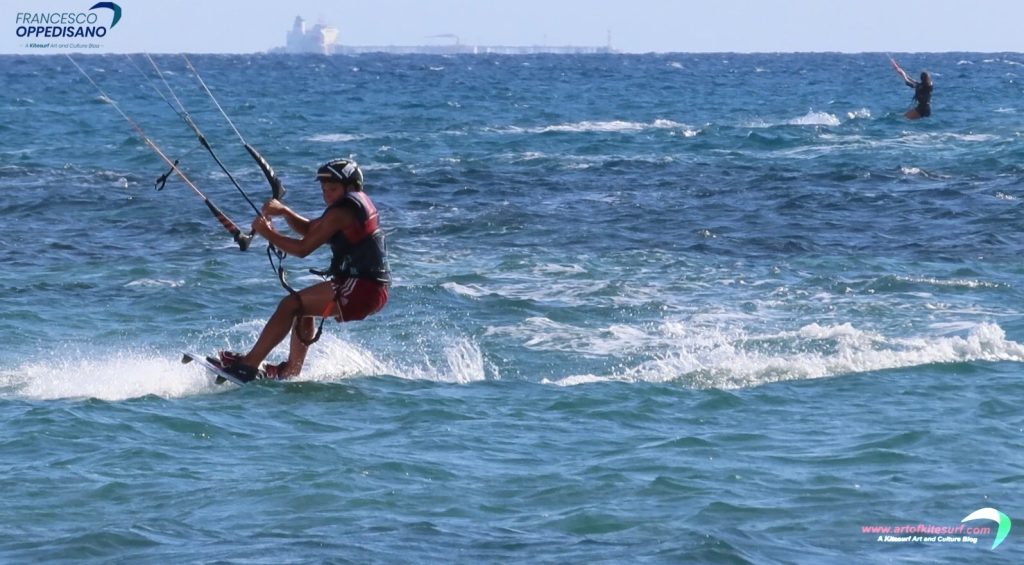
I'll never stop telling you to wear a helmet, wear a jacket, and attach a leash to the front of your harness . In moderate winds, ensure adequate space downwind and no obstacles (e.g., rocks, boats, etc.). Remember that in this sport, you can't have limited maneuvering space, either in the water or on land, so always be wary of anyone who sends you to schools with very limited and overcrowded spaces. Now let's get to the first real dynamic sailing exercise : "unhooking and jumping." With adequate speed and a beam-level pace, you'll need to try to make a small jump without the help of the kite or excessive pop, but using primarily your own speed.
How is it done?
I want to make it clear right away that this isn't a kitesurfing course, just tips, advice, and technical insights I'm trying to share to get you thinking about all the training available in the world of kitesurfing. This is the sole and true purpose of Artofkitesurf . A training program dedicated to freestyle kitesurfing requires much more. It requires a highly professional, responsible program with outstanding skills. Only by undergoing this kind of training will you be able to reach your true goals.
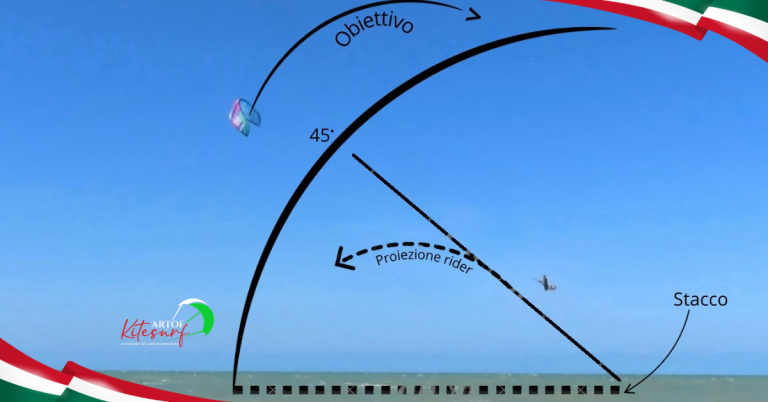
Keep your hands firmly in the center of the bar with the kite at approximately a 45-degree angle. Bend your legs slightly, shift your shoulders forward toward the kite, and bring the board slightly flat on the water (but not too flat), and begin to unhook. Using your speed, push with your back leg and lift your front leg, bringing the board back slightly into the wind. If you do this correctly, the board will pop out of the water, performing your first small unhooked jump. Don't forget to keep your arms bent close to your sides.
When you feel yourself lifting, try to bring the board horizontal by drawing your back leg. With both legs bent and the board parallel to the water, direct it downwind to prepare for the landing from your first, very simple unhooked jump . Land with the board flat on the center and cushion the impact with the water with your legs. If you've followed all the steps carefully, you'll find yourself with a pressure-free bar ready to be hooked into your harness. Remember that all of this must be done with the board almost flat, without putting too much pressure on the kite, but rather making the most of your speed.
Freestyle in kitesurfing is pop
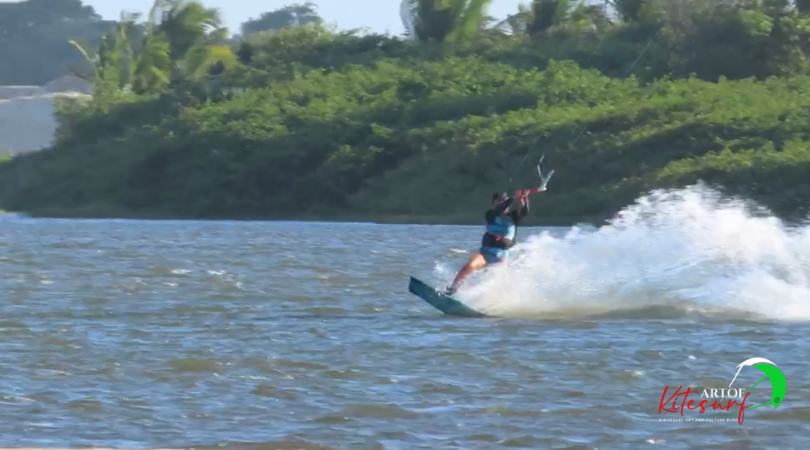
I'll give you some advice on this important technical move, but learning to perform a powerful and effective freestyle pop is no easy feat. The pop in kitesurfing is the most difficult technical move to perform in any discipline. It requires precise technical training, with supporting images, and a serious and professional teaching method. There are some important basic exercises derived from wakeboarding that any well-trained school or instructor will surely be able to teach you.
Sail at a good speed , and just before the lines reach their maximum tension, you should unhook. To relieve pressure on the lines, you can help by laying the board flat or easing it very slightly. Try to keep its entire profile in the water and direct your speed into the wind, applying pressure on your back leg and steering your twintips with your front leg, avoiding the mistake of losing centeredness.
Very important:
When you release yourself while catching the edge of the board, you absolutely must not let yourself be carried forward with your shoulders, because you would immediately lose active dynamism (the board must run into the wind, increasing the pressure on the windward edge of the board).
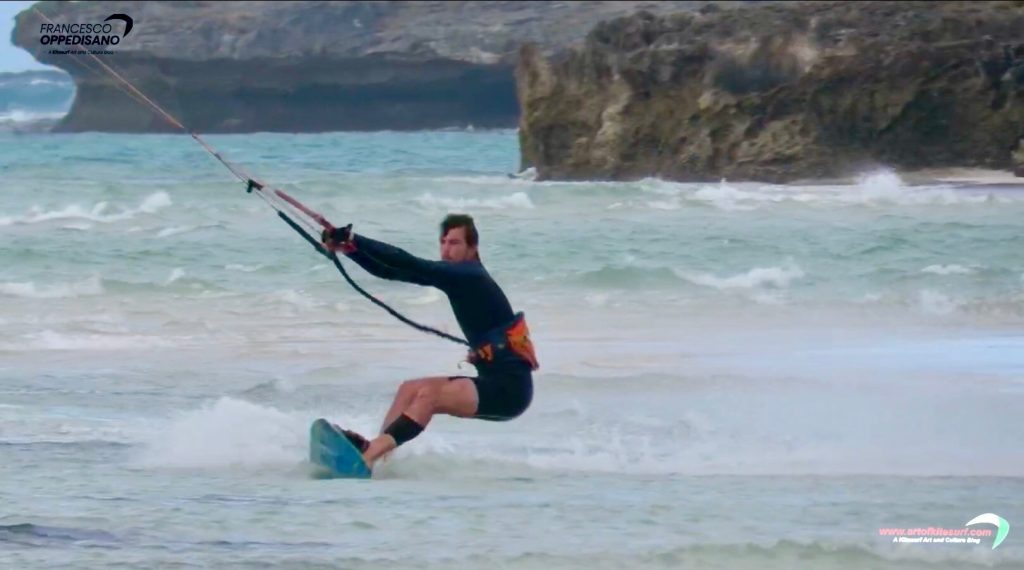
To create pressure on a twintip, simply pushing back isn't enough. You need to aid your takeoff by moving your back hip toward the kite and your front hip toward the wind. The kite should hover just before 11 or 1 o'clock (depending on the direction). Don't make the mistake of raising it too high, because you won't be able to counteract it, causing you to jerk forward. A sign that you're doing things correctly is the kite's behavior and your position. When you go for a pop, you should feel the kite tending to move slightly to the edge of the window.

If this doesn't happen , or if it even moves too far toward the edge of the window, there could be two problems. If it stays in the center without moving, the error lies in the wrong take-off point; if it moves too far, the error could be due to incorrect control of the bar trim. The purpose of pop in freestyle is to increase the power of the take-off with the goal of being able to slacken the lines in the second part of the maneuver to facilitate its completion. If you can't succeed, there are certainly obvious technical and dynamic errors that need to be corrected. This is assuming the kite's trim is perfectly adjusted, because then the causes could be other and different.
Freestyle in kitesurfing is the first very simple maneuver
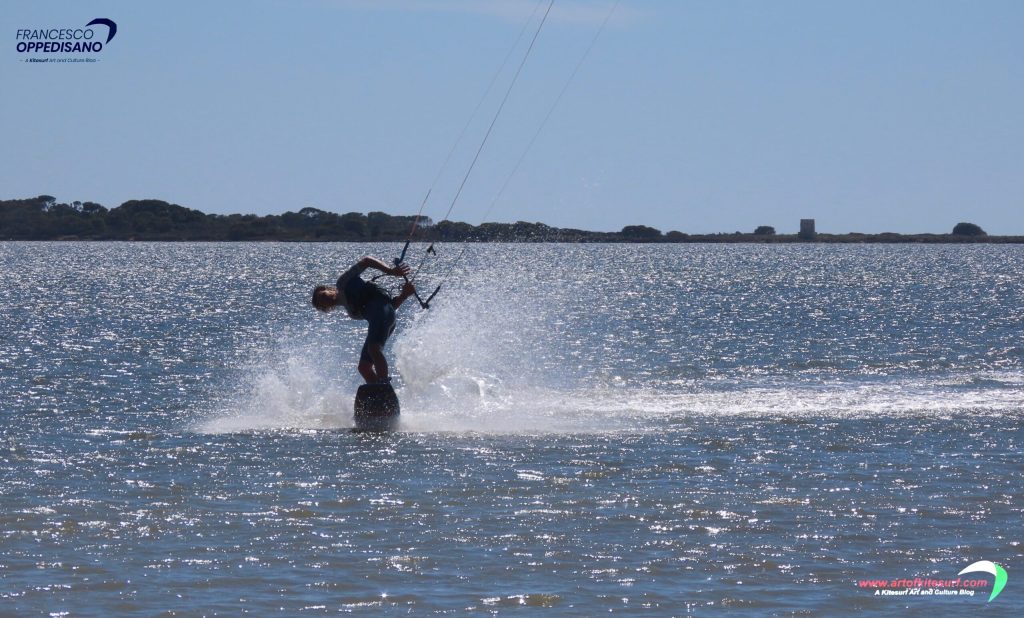
The first water-dividing trick in freestyle kitesurfing is the bar pass by rotating on the board while it's in the water (surface). First, let's distinguish this simple maneuver. If we pass the bar from the front riding hand to the back hand, it's called "backside." If we pass from the back riding hand to the front hand, it's called "frontside." There are various exercises to learn how to perform it. I'll show you the main one.
Tie the lines to the ground somewhere, and practice rotating correctly, passing the bar from one side to the other. This exercise shouldn't be done frivolously, but rather by focusing on the correct technique with the indispensable help of video footage (ideomotor technique). Learn right away to keep your body tense and to rotate the wrist holding the bar well behind your back, to facilitate the grip with the other hand. Another very important thing in freestyle is the leash ; it's not necessary to hold it behind you; simply attach it to your side to ensure greater safety.
Freestyle in kitesurfing we bring everything into the water
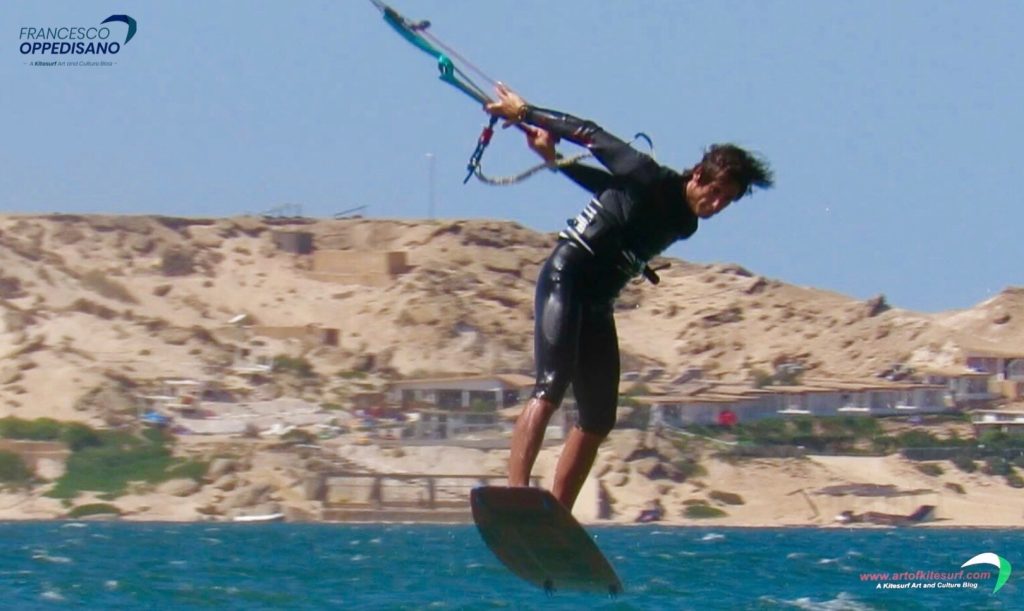
You then need to take this exercise into the water, positioning the unloaded kite at the edge of the window, so that it remains stable when you unhook. After these two semi-static steps, it's time to add a bit of dynamism to everything. Then repeat the same exercise, but this time holding the kite a few meters out of the water at the edge of the window. Before starting, unhook yourself and practice holding the kite with one hand, controlling it at mid-height. With your middle fingers on the bar straddling the depower, try to move and control the kite while keeping your shoulders still and using only your wrist. If you perform a correct ideomotor movement on land, supervised by a skilled technician, you'll find it quite easy.
You just read the reason why you don't master this simple basic freestyle maneuver.
If you can't do it on land safely and without a board, how can you expect to do it while sailing?
Freestyle in kitesurfing conclusion
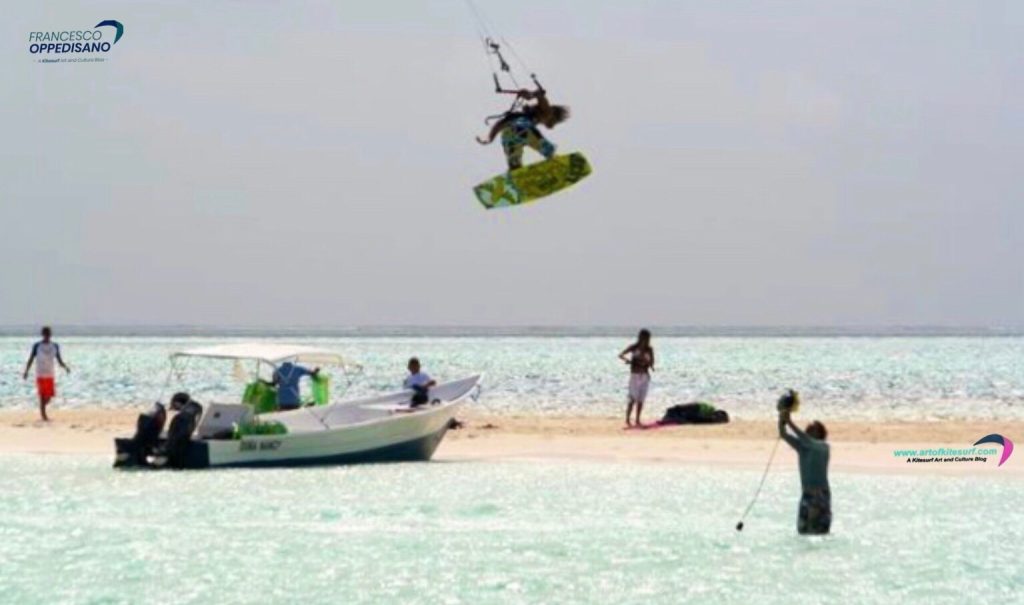
What you've read in this Artofkitesurf article is the basic introduction to the world of freestyle. You can obviously get started in a thousand other ways, but know that if you don't learn the essential basics, you'll have a difficult and likely frustrating journey. I'll give you one last piece of advice; more than advice, I'd say it's a way to make you think about the money and time you're wasting.
If you're not a skilled airstyle or freeride kiter, with a command of those 9-10 basic maneuvers at reasonable heights, avoid freestyle. The same goes for everything else; for example, if you don't know how to jibe with a twintip, or how to handle it smoothly in simple waves, or if you don't know how to go upwind well, don't switch to surfboarding. As I've already mentioned, you'll waste time and money. Learn the basics first, and only then will you be able to pursue and achieve your dreams. I hope I've helped you understand that in sport, as in life, nothing is handed to you, and anyone who tries to make you believe otherwise is not honest.
Read also: "Technical differences and secrets of the two basic airstyle maneuvers"
If you'd like to learn more about this or any other topic, we're here to help. Simply contact us using the button below, or you can subscribe to our NEWSLETTER to receive excellent insights. You can also request information about our Special Courses abroad, Personal Courses, and Schoolmaster Courses, all recognized by CONI and meeting the highest national quality standards (SNAQ 1). Our increasingly popular Coaching Calls are all guaranteed by the CONI-RECOGNIZED SPORTS PROMOTION BODY LIBERTAS and ARTOFKITESURF.COM, offering you a dedicated growth insurance policy. You'll be sure to get back to us within hours. The Artofkitesurf technical blog is a unique resource in the kitesurfing industry, recognized as the most reliable and authoritative online. Request information for any of your needs, whether you're an individual or a school.